

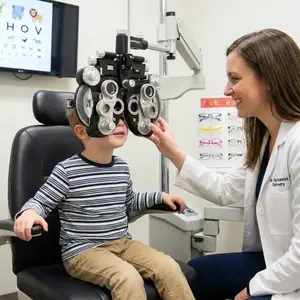
More children are developing myopia than ever before. Learning how myopia control works can help protect your child's vision today and support healthier eyes for years to come.
Many parents expect their child to need glasses at some point. A pair of frames often feels like a simple rite of passage. Yet when a prescription grows stronger year after year, it tells a larger story about how the eye is developing.
Myopia, commonly called nearsightedness, has become increasingly common among children worldwide. While glasses help children see clearly, they do not slow the progression of myopia. That's where myopia control comes in.
At Friedman Optometry, we work with families throughout Culver City to help children maintain clear vision while supporting long-term eye health. Early intervention can make a meaningful difference in how myopia progresses over time.
What Is Myopia?
Myopia occurs when the eye grows too long from front to back. As a result, light focuses in front of the retina rather than directly on it. This causes distant objects to appear blurry while close-up vision remains clear.
Children with myopia may:
-
Squint when looking at distant objects
-
Move closer to screens or books
-
Struggle to see the classroom board
-
Experience headaches after visual tasks
-
Need stronger glasses prescriptions during annual exams
Many parents view myopia as a simple vision correction issue. Modern research paints a broader picture.
As myopia progresses, the eye continues to elongate. Higher levels of myopia can increase the lifetime risk of several serious eye conditions, including glaucoma, retinal detachment, cataracts, and myopic macular degeneration.
This connection has shifted the conversation from simply correcting vision to actively managing eye growth during childhood.
Why Is Myopia Becoming More Common?
Several factors contribute to the rise in childhood myopia.
Genetics play a role. Children with one or both parents who have myopia face a greater likelihood of developing the condition themselves.
Lifestyle habits also influence visual development. Children today spend more time indoors and more hours focused on screens, tablets, phones, and other near-work activities. Meanwhile, outdoor play and distance viewing have become less common parts of daily life.
The result resembles a tree that continues to stretch in one direction. Without guidance, growth follows its natural path. Myopia control seeks to guide that growth toward a healthier outcome.
How Does Myopia Control Work?
Myopia control focuses on slowing the progression of nearsightedness while children are still growing.
Instead of waiting for prescriptions to become stronger each year, myopia treatment begins with a proactive plan designed around the child's specific needs.
Several effective options are available.
Orthokeratology (Ortho-K)
Ortho-K uses specially designed contact lenses worn overnight. While your child sleeps, the lenses gently reshape the surface of the eye.
Children remove the lenses each morning and enjoy clear daytime vision without glasses or contact lenses.
Many active children enjoy the freedom ortho-k provides during sports, outdoor activities, and school.
Soft Myopia Control Contact Lenses
Daily disposable lenses such as MiSight® 1 Day are specifically designed to help slow myopia progression while providing clear vision throughout the day.
These lenses offer a convenient option for children who are comfortable wearing contact lenses and want an alternative to glasses.
Lifestyle Guidance and Monitoring
Successful myopia management often includes healthy visual habits.
Simple recommendations may include:
-
Increasing outdoor time
-
Taking breaks during prolonged screen use
-
Maintaining proper reading distance
-
Attending regular eye examinations
Small adjustments performed consistently can support healthier visual development over time.
When Should Parents Consider Myopia Control?
Many parents are surprised to learn that myopia management works best when started early.
If your child received glasses before age eight, experiences annual prescription increases, or spends long periods on near-work activities, it may be time to discuss myopia control options.
Regular pediatric eye exams help identify changes before they become larger concerns. Early detection creates more opportunities to influence the course of myopia progression while the eyes are still developing.
Why Consistency Matters
Myopia control is not a one-time treatment. It is an ongoing process that follows your child through some of their most important years of visual development.
Think of it like steering a ship. Small course corrections made early can influence where the journey ends. The same principle applies to your child's eyes. Regular monitoring allows your optometrist to track changes, evaluate treatment effectiveness, and make adjustments when needed.
Parents often ask whether myopia control can "cure" nearsightedness. The goal is different. Myopia control aims to slow progression and reduce the likelihood of reaching higher levels of myopia later in life.
Even a modest reduction in prescription growth can have meaningful long-term benefits for eye health.
Spotlight on MiSight® 1 Day Contact Lenses
One of the most exciting advances in myopia management is MiSight® 1 Day contact lenses.
MiSight lenses were specifically developed for children with myopia. Unlike traditional contact lenses that focus only on vision correction, MiSight lenses are designed to help slow the progression of nearsightedness while providing clear, comfortable vision.
These daily disposable lenses fit easily into many families' routines. Children start each day with a fresh pair, eliminating the need for cleaning solutions or overnight storage.
For many parents, MiSight offers several advantages:
-
Clear vision throughout the day
-
Comfortable daily disposable design
-
Freedom from glasses during sports and activities
-
A treatment backed by years of clinical research
-
A simple routine that many children adapt to quickly
Children who participate in sports, dance, swimming, or other active pursuits often appreciate the flexibility that contact lenses provide.
At Friedman Optometry, we evaluate each child's prescription, eye health, lifestyle, and visual needs before recommending whether MiSight, ortho-k, or another myopia control approach is the best fit.
Building Healthy Vision Habits This Summer
June marks the beginning of summer break for many families, making it an ideal time to focus on healthy visual habits.
Longer days create more opportunities for outdoor activities, which may support healthy eye development. Whether your child enjoys bike rides, sports, park visits, or family adventures around Culver City, outdoor time gives the eyes a chance to focus at varying distances throughout the day.
Summer also offers a natural opportunity to review screen habits before the next school year begins.
A few simple strategies can help:
-
Encourage outdoor play every day
-
Follow regular screen breaks during extended device use
-
Maintain proper posture while reading
-
Schedule annual pediatric eye exams
-
Monitor changes in visual behavior
These habits work alongside professional myopia management to support healthy vision throughout childhood.
Myopia Management in Culver City
For more than 60 years, Friedman Optometry has helped families navigate changing vision needs through every stage of life. Today, that commitment continues through modern myopia management solutions designed for today's children.
We understand that hearing your child needs stronger glasses year after year can feel discouraging. Our team takes the time to explain your options, answer questions, and create a personalized treatment plan that fits your child's lifestyle.
Whether your child may benefit from ortho-k, MiSight® 1 Day contact lenses, or ongoing monitoring, we're here to help you make informed decisions about their vision.
Take the Next Step for Your Child's Vision
The earlier myopia is identified, the more opportunities there are to influence its progression. A proactive approach today can help support healthier vision for years to come.
If you're concerned about your child's nearsightedness or have noticed frequent prescription changes, schedule a pediatric eye exam and learn more about today's myopia control options.